 Member Login



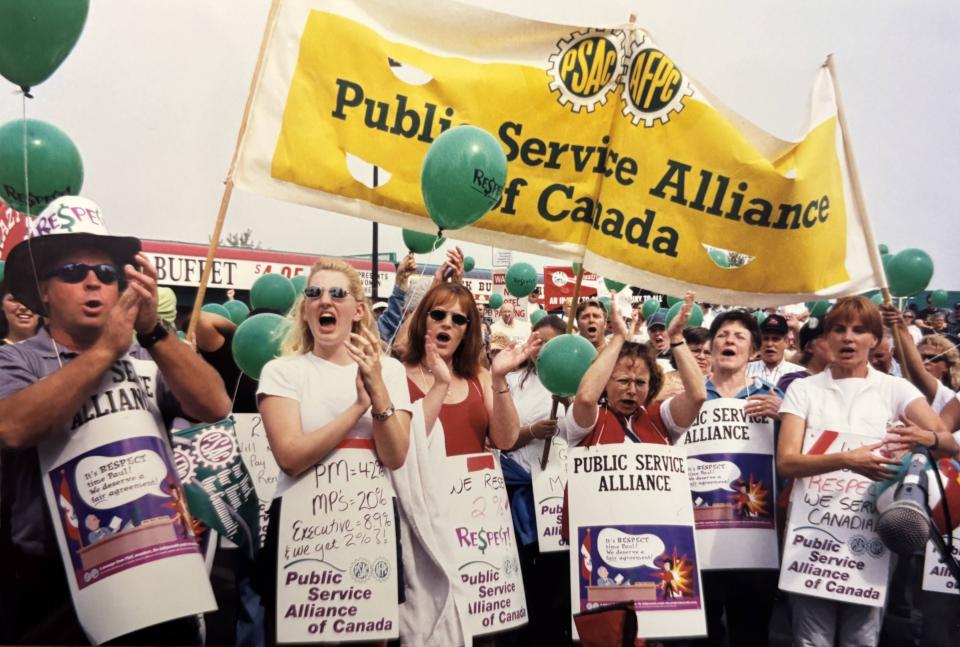
Strike action is the most effective tool we have to break through employer stalemates and secure the fair contract we deserve.
And we might need that tool again. After a year and a half of negotiations, the federal government is still refusing to budge on our top issues like wages, job security, fair remote work, and protections against artificial intelligence. That’s why we’ve launched strike votes for 120,000 federal public service workers in the PA, TC, and EB groups.
History shows there’s everything to be gained when we organize against tough employers and bad offers. The protections federal public service workers rely on today exist because members took those issues to the picket lines — even when it was difficult, inconvenient, and the outcome was uncertain. Refusing to back down is how we won then, and it’s how we’ll win now.
Pushing past limits with the 2023 strike
When members in the PA, TC, SV, and EB groups took strike action in 2023 alongside our PSAC-UTE members at the Canada Revenue Agency, they succeeded in pushing the federal government well beyond its original offer and won the highest wage increases those groups had received in 25 years and the strongest collective agreement in the federal public service.
By holding the line, members secured higher annual wage increases, plus a $2,500 pensionable lump-sum payment. That brought the average member's total gain to $23,000 over the life of the agreement — putting $6,000 more into members’ pockets than what the employer offered before strike votes began.
And it wasn’t just about paycheques. Before the strike, the government refused to budge on remote work, job security, or workplace equity. By striking, members secured the remote work letter of agreement, which set the stage for the protections we’re fighting for in this round.
Winning what they claimed was impossible
Throughout this round, Treasury Board has been telling us that remote work protections are a non-starter. But we’ve heard that before.
Back in 1991, the employer refused to negotiate job security. PSAC members responded by launching what became the largest Canadian strike in history up to that point. We held our ground and forced the government to create the Workforce Adjustment Appendix, which has helped protect workers’ jobs for decades since.
Just like remote work today, job security was once deemed non-negotiable by the employer, until member action put it into the collective agreement. Now, Treasury Board is trying to strip away those hard-won job security protections, while dragging its feet on modern remote work rights. But we aren’t about to give up this fight either. Treasury Board’s failure to honour the Letter of Understanding on Telework as the parties intended in the last round is clear proof that this employer can’t be trusted . We need binding, enforceable language enshrined directly in our collective agreement.
Decades of victories on the picket line
Our history proves that groundbreaking workplace rights begin on the picket line:
-
In 1980, tens of thousands of PSAC members went on strike for maternity leave benefits, paving the way for the 93 per cent top-up that families rely on today.
-
In 2001, the "Workless Wednesdays" strike led to the Treasury Board policy requiring the conversion of term employees to indeterminate status after three years. This requirement is now part of a Directive on Term Employment. That same strike created the Joint Learning Program, which continues to help us fight discrimination and harassment, while championing mental health at work.
-
In 2021, FB members took one-day work-to-rule action and secured a paid meal allowance for uniformed members, a commitment to advance early retirement benefits, plus an eight per cent wage increase, better protections against excessive discipline, and improved leave.
We’ve got momentum on our side
From strike training sessions to our monthly Days of Solidarity, PSAC members have spent the past year organizing, mobilizing, and building strength. Over the summer alone, more than 12,000 members showed up for virtual bargaining town halls, strike trainings, and workplace actions across the country.
Members are fired up and engaged because they’re feeling the squeeze. Costs are skyrocketing, making ends meet is harder than ever, and certain political narratives portray public service workers as expendable.
Public service workers are critical to this country’s well-being and prosperity. The work our members do keeps Canada running every single day, and we deserve a deal that reflects our true worth.
Over the coming months, 120,000 PSAC members in the PA, TC, and EB bargaining groups will cast their strike votes. A strong strike mandate is the ultimate wake-up call to show the federal government we aren't backing down.
We know how to hold the line and win historic contracts because we’ve done it for decades. The government has left us with no other choice. Let's use our collective power to win the fair contract every member deserves.
What you can do right now
Taking action is how we win. Here’s how you can get involved today:
- Find a session and register to vote: Make your voice heard and send a clear message to Treasury Board by casting your strike vote.
- Sign up for strike prep training: Learn about strike roles, strike pay, running effective picket lines, and member rights.
- Read the FAQs: Get answers on voting eligibility, logistics, and what to expect.
Make sure your contact information up to date so you get strike vote credentials and critical bargaining updates. Log in to the PSAC Member Portal or download the PSAC-AFPC member app to check and update your personal email, phone number, and mailing address.


