 Member Login



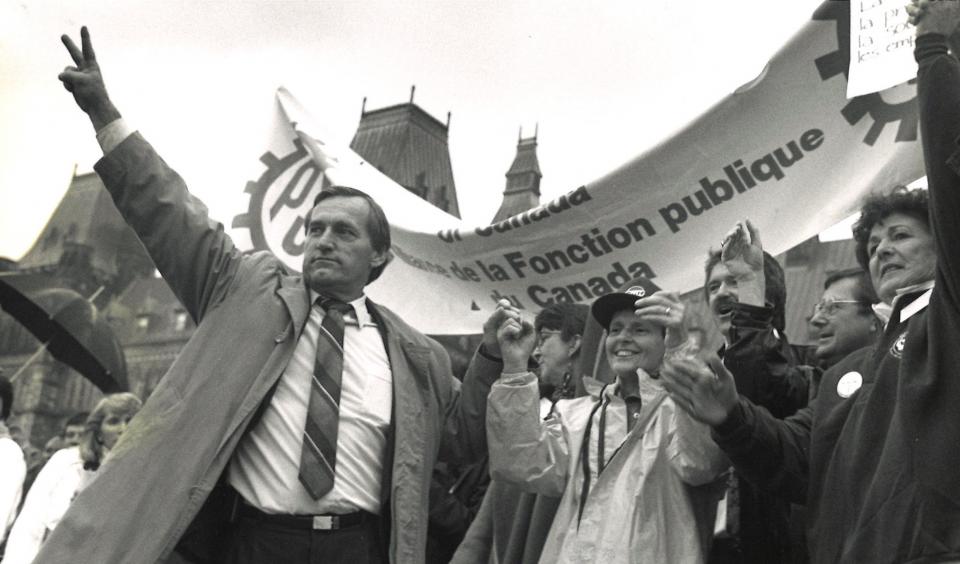
Daryl was always a fighter for the underdog. This commitment continued into his working life, when he became a stationary engineer with the federal government. It attracted him to his local union which became part of one of the first Components of the new Public Service Alliance of Canada. He served as a shop steward and then local president, finally rising to become National Vice-President in 1972 and later the National President of the original Public Works Component, a position he served in until 1982.
Even as he rose through the leadership ranks of the union, Daryl never forgot where he came from and always made time to speak with members and answer their questions. One of his main interests was in collective bargaining and he saw this as the best way to secure benefits and good working conditions for the membership. He was elected as a National Vice-President of the PSAC in May, 1982 and requested that portfolio as his main responsibility.
Over the next three years, Daryl helped lay the groundwork for modernizing and improving collective bargaining in the federal public sector. One major development was the creation of a master contract to cover all PSAC members who worked for Treasury Board as well as the recognition of political rights for these workers as well. But it was during his time as National President of PSAC from 1985-2000 that he made his mark on both the collective bargaining and political landscape in Canada.
In 1991 Daryl led 100,000 members on a general strike against the wage freeze declared by the federal government. This was the largest one-union strike in Canadian history and the demands were not just monetary. The PSAC also sought job protection in the case of arbitrary government cutbacks. The settlement that followed the 1991 strike delivered the first Workforce Adjustment Agreement which guaranteed a reasonable job offer and the right to switch jobs in order to avoid layoffs.
This provision would prove crucial when a subsequent government announced 10,000 positions to be cut. Through the WFA process only a handful of employees were eventually laid off. There were also many other firsts that the union gained during this round of bargaining including the first ever dental plan for the federal public service.
If you asked Daryl what he was most proud of he would always say being a part of pay equity. During his time as National President he helped direct the union forward on a longstanding complaint by female employees that they were underpaid compared to their male counterparts. Through setbacks and challenges and with the support and assistance of staff, lawyers and women leaders and activists, PSAC won an historic pay equity victory on October 29, 1999 when the federal government announced its plan to implement what stands as the biggest pay equity settlement in history.
This agreement, worth between $3.3 billion and $3.6 billion, covered about 200,000 current and former members of the PSAC. It was a landmark victory that opened the door for hundreds of thousands more female workers to get some small measure of economic justice. Many years later, this is still recognized as one of the most significant moves forward for women workers, not just in the federal public service, but across society.
During Daryl’s tenure, women’s leadership was advanced within PSAC, through the establishment of regional and national women’s conferences. PSAC also championed important legal challenges against discrimination, racial and sexual harassment, resulting in landmark court decisions which continue to impact Canadian workplaces.
Daryl also served on the executive of both the Canadian Labour Congress and the Public Services International. He received many awards and accolades for his work, including being made a Life Member of PSAC. But Daryl didn’t seek leadership perks or popularity. To the end he stayed focused on serving the interests of the PSAC membership. He also believed in the J.S. Woodsworth quote that ‘what we desire for ourselves, we wish for all’ and sought to improve the lives and working conditions of everyone in society.
He was a true trade unionist who practiced what he believed in: fairness, justice and equality.


